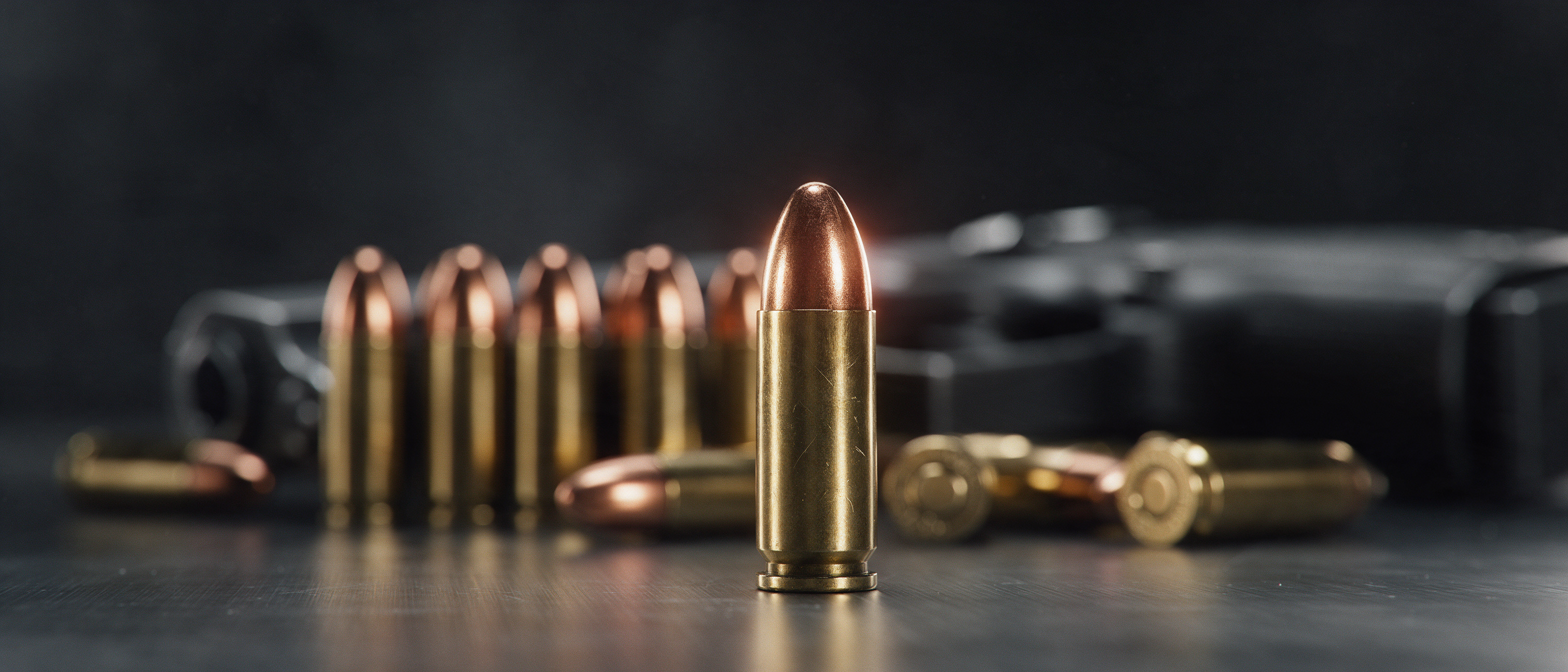
One Cartridge Conquers the World
It is unassuming, barely three centimetres long and weighs only about twelve grams complete with bullet. Yet there are few cartridges in the world that are made, fired and collected as often as the 9×19 mm Parabellum. It is found in military pistols, police sidearms, sporting handguns and submachine guns, and it is the global standard among handgun cartridges. Its story begins more than 120 years ago, and Switzerland plays a special part in it.
Origins: From Borchardt to Luger
It did not begin with a 9 mm round, but with a smaller calibre. In 1893, German designer Hugo Borchardt introduced the first truly production-ready self-loading pistol, the C93. It fired the bottlenecked 7.65×25 mm Borchardt. The gun was powerful, but large, heavy and awkward to handle.
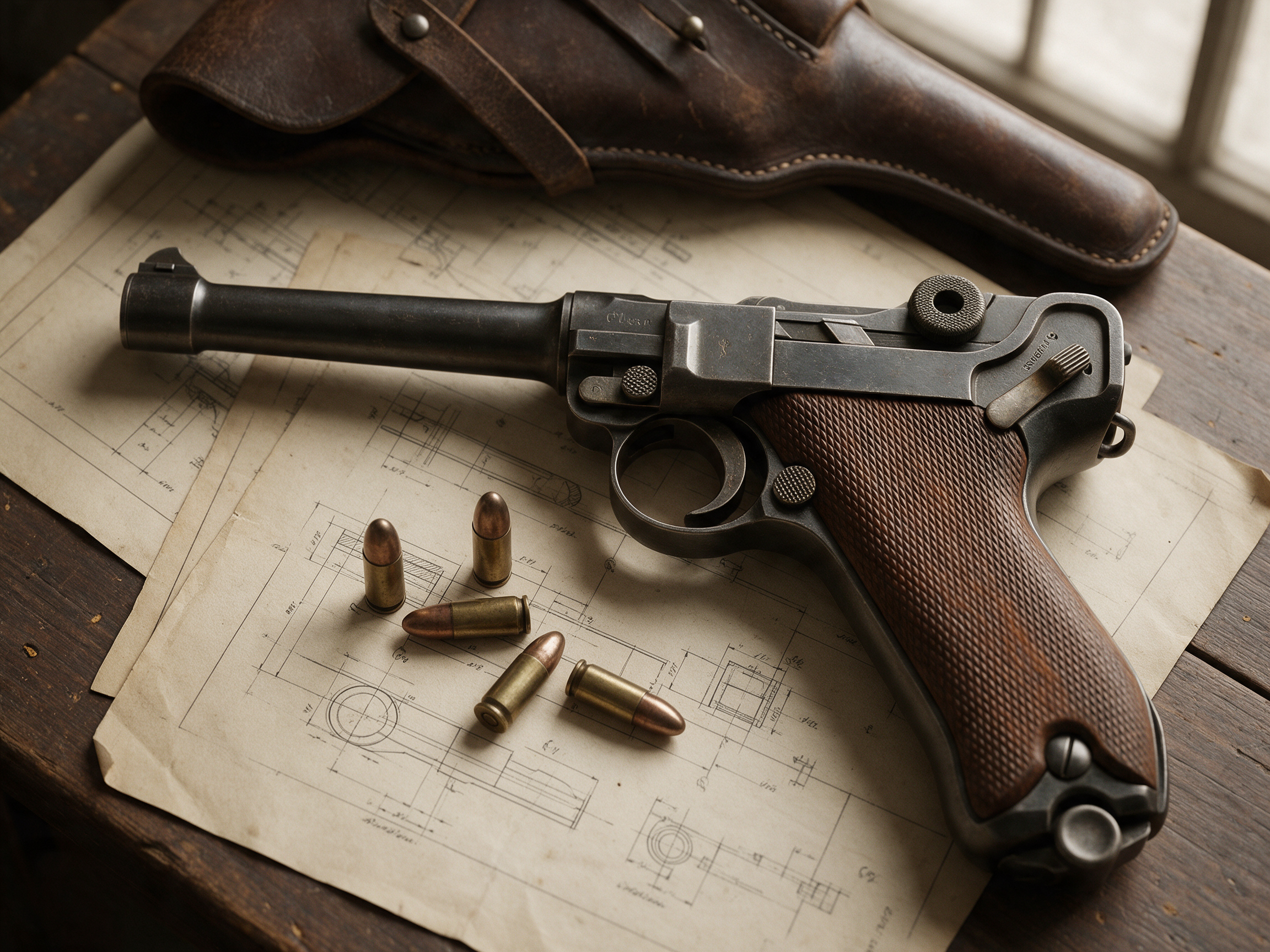
His compatriot and colleague Georg Luger turned it into a practical everyday product. He improved the mechanism with a toggle-lock action and modified the cartridge. The pistol became more compact and sat better in the hand. In 1898 the 7.65×21 mm Parabellum appeared, and the pistol later became known as the "Parabellum pistol". It was marketed by DWM (Deutsche Waffen- und Munitionsfabriken).
Switzerland as the First Customer
The first state to officially adopt the Luger pistol was Switzerland. The army took it into service in 1900 as the Ordonnanzpistole 00 chambered in 7.65 mm Parabellum. It was a major success for the young design. The Swiss troop trials are still regarded as having paved the way for the pistol's worldwide triumph.
The Birth of the 9 mm
The 7.65 mm cartridge was accurate, but many military men found it lacking in effect on target. The German navy in particular called for more stopping power. In 1901/1902, Luger therefore necked the 7.65 case out to take a 9 mm bullet. The result was the 9×19 mm, initially called the "9 mm Luger". The Imperial Navy adopted it in 1904 with the "Pistole 04". The army followed in 1908 with the famous Pistole 08 (P08).
Where the Name "Parabellum" Comes From
The name has a nice origin. DWM used the word "Parabellum" as its telegram address and trademark. It comes from the Latin proverb "Si vis pacem, para bellum", meaning "If you want peace, prepare for war." A cartridge named after an advertising slogan is certainly unusual. The name stuck, and today it appears on millions of ammunition boxes.
What Was It Designed For, and What Is It Used For?
Originally, the 9×19 mm was a military cartridge for service pistols. It was meant to equip soldiers, officers and crews with a handy, reliable sidearm. It soon became clear, however, that it could do much more:
- Submachine guns: The Bergmann MP 18, introduced in 1918, is regarded as the first practical submachine gun and fired the 9×19 mm. The MP 40, Sten, Uzi and MP5, among others, followed later.
- Military pistols: The Browning Hi-Power (1935), the Beretta 92 and the SIG models all relied on this cartridge.
- Police and authorities: Thanks to its good controllability and high magazine capacity, many forces have standardised on 9 mm.
- Target shooting: The cartridge is accurate and affordable, and therefore popular with shooters.
- Self-defence: In the civilian market, it is the best-selling handgun calibre in many countries.
What Makes the 9×19 mm Unique?
It is neither the most powerful cartridge nor the biggest. Its strength lies in the overall package:
- Balanced ballistics: A classic 8 g (124 grain) bullet reaches roughly 350–400 m/s. That delivers plenty of effect with manageable recoil.
- High magazine capacity: Thanks to its slim shape, modern pistols often hold 15 to 20 rounds. The Glock 17 even carries its capacity in its name.
- Reliable feeding: The slightly tapered, straight-walled case feeds smoothly from the magazine into the chamber.
- Global availability: Hardly any calibre is as easy to find anywhere in the world, whether as service ammunition, target rounds or police loads.
- Versatility: It is available with full metal jacket, soft point and hollow point bullets, subsonic loads for suppressors, and hotter "+P" loadings.
- Standardisation: NATO has codified the cartridge in the STANAG 4090 standard. This makes ammunition and weapons interchangeable within the alliance.
Curious Tales Around the 9 mm
Mauser's "Red 9"
In the First World War, the German army urgently needed pistols. Mauser supplied a version of the famous C96 chambered in 9×19 mm. To make sure nobody mistook it for the 7.63 mm variant, a large red "9" was burned into the grip panel. It went down in collecting history as the "Red Nine".
The Snail Drum
For the artillery version of the Luger P08, a huge 32-round snail drum magazine was developed. It looked like a foreign object stuck to the pistol grip and was awkward to load. Today, collectors prize it all the more for that.
War Booty and Film Star
After the Second World War, countless soldiers took Luger pistols home as trophies. The gun thereby became a cinematic cliché as well: whenever an officer appeared on screen, he usually had a Luger on his hip.
The Stopping-Power Debate
The Hague Convention prohibits dum-dum and other expanding bullets in warfare. Armies therefore use full metal jacket ammunition. This is considered less effective than the hollow points common among police and civilians. The "9 mm versus .45 ACP" debate has been a perennial favourite for over a hundred years. In 1985, the US armed forces switched from the .45 calibre 1911 pistol to the 9×19 mm with the Beretta M9. The FBI, too, returned to the 9 mm after years with the .40 S&W. Modern bullet technology has since narrowed the performance gap considerably.
The Calibre That Is Sometimes Off Limits
In some countries, the 9×19 mm is banned or heavily restricted for civilians as a "military calibre". Manufacturers responded with slightly modified cartridges. The best-known example is the 9×21 mm, common in Italy. It looks almost identical, but has a longer case and cannot be used in every 9 mm firearm.
The 9×19 mm in Switzerland
In Switzerland, the cartridge enjoys something close to cult status. The SIG P210 was introduced as the Ordonnanzpistole 49 and is still regarded as the epitome of precision and craftsmanship. It was followed by the SIG P220 as the Pistole 75, familiar to many shooters from their military service. Both fire the 9×19 mm.
Ammunition production also has a long tradition here. Army ammunition was made for decades by RUAG Ammotec in Thun, today under the umbrella of Swiss P Defence. Swiss service ammunition is prized by shooters for its consistent quality.
What Role Does the 9×19 mm Play Today?
More than 120 years after its creation, the cartridge is more relevant than ever. It has displaced other calibres such as the .45 ACP, .40 S&W and 7.65 mm Browning in many fields. There are several reasons for this:
- Armies and police forces in dozens of countries rely on 9 mm. In 2017, the US Army again chose a 9 mm pistol with the SIG Sauer M17.
- Modern pistols from Glock, SIG Sauer, Heckler & Koch, CZ, Beretta, Walther and many others are mostly offered in 9×19 mm.
- Pistol-calibre carbines (PCCs) are popular in many shooting sport disciplines and also use this cartridge.
- Civilian users benefit from the wide choice and comparatively low prices.
Availability and Legal Situation
Availability depends heavily on the country. In the USA, 9 mm firearms and ammunition can be bought in large numbers. In Europe, acquisition is strictly regulated. In Switzerland, buying a pistol requires a weapons acquisition permit (Waffenerwerbsschein). Requirements include a minimum age of 18, a good reputation and a clean criminal record extract. Age limits and proof requirements also apply when buying ammunition. The implementation of the EU Firearms Directive also affects high-capacity magazines and semi-automatic weapons, for example through registration requirements and exemption rules. Anyone pursuing shooting as a hobby should therefore seek information from the responsible cantonal weapons office or a shooting club.
Conclusion: A Classic That Doesn't Age
The 9×19 mm Parabellum is a rare example of a design that has held its own against fashions and competition for decades. In 1902, Georg Luger created a cartridge that is neither a record-breaker nor an exotic. Its success rests on balance, reliability and enormous proliferation. Whether in a Swiss service pistol, a police sidearm or a target pistol, this small piece of brass is in use almost everywhere shooting takes place. The calibre is thus not merely a piece of firearms history, but a living standard, and there is no end to this success story in sight.